10-minute read
Rhonda Jean, a resident of Asheboro, NC, had just received a call from Will McGuire, Founder and CEO of incolo.io, canceling their scheduled meeting. She had been working with other entrepreneurs in the process of launching her platform, Nearby Nearby, which aims to bring local businesses, events, and services together for both rural and urban communities across North Carolina and beyond. However, Hurricane Helene had changed everything. “Will called me and said we had to cancel because they were pushing emergency supplies to Western North Carolina,” Rhonda recalls. Shortly after, she saw a message from him asking for help: “We’re looking for fuel tank drivers, even if you have a truck we could use the help.”
That’s when Rhonda stepped into what is now known as the Western Carolina Emergency Network (WCEN). “I told him I had access to about 500 gallons of fuel, but we didn’t have the funds to fill the tanks. As a coordinator in the newly formed WCEN, Will found a solution. “He called me back and said, ‘We’ve got the funds—let’s fill those tanks and get them out,’” she remembers.
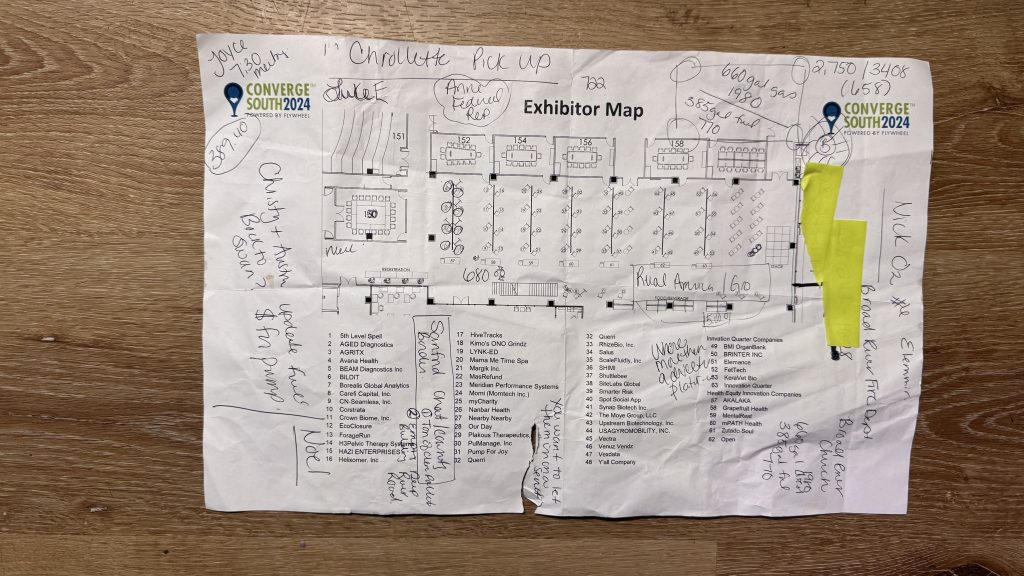
At the time, Rhonda was also packing for Converge South, a major convention in Winston-Salem where she was scheduled to pitch her platform. Will reached out again with an urgent request: “He asked me, ‘Do you know anybody else? We can’t seem to find anyone with tanks and trucks who can drive out there.’” It seemed almost inevitable—Rhonda’s entire business was centered on connecting rural America! Naturally, she had the contacts and people willing to step up.
Between meetings with investors and networking events, she found herself organizing fuel deliveries, making calls, and coordinating drivers. “I was scribbling notes on the exhibitor map at the convention,” she says. In a very short amount of time, Rhonda was organizing, background checking, and vetting about 90 different people to be drivers for fuel runs.
The outpouring of support from the community has been nothing short of incredible. Volunteers from all walks of life—farmers, firefighters, and everyday locals—stepped up without hesitation to drive fuel deliveries to the hardest-hit areas. We can’t thank our current drivers enough:
- Austin Livengod
- Ben Vanhook
- Brian Penrod
- Chase Parsons
- Chris Barker
- Christy Sowers
- Dan Jones
- Jacob Kost
- Jon Higdon
- Nick Dahlenburg
- Noel Billings
- TJ Frost
- Walt Waggoner
- West Caudle
The Devastation in Western NC
As a fellow North Carolinian, Rhonda knew how important it was to help the rural areas hit by Hurricane Helene. The impact in Western North Carolina was staggering. Mud and debris covered entire landscapes, leaving little to no visibility of the damage underneath. “I think the biggest thing that people are having trouble understanding is how devastating it actually is,” Rhonda explains. “We were driving by mud piles 30 or 40 feet high, piled on the side of the roads. Everything is covered in mud, from the top of the trees to the ground, and it’s hard to visualize just how bad it is.”
Beyond the immediate wreckage, there’s an even greater problem: fuel shortages.
Videos and photos can’t fully capture the magnitude of the destruction, and beyond the immediate wreckage, there’s an even greater problem: fuel shortages. As winter approaches, rural communities are at risk of freezing without access to essential heating fuel like kerosene.
The Fuel Efforts in Western NC
Fuel is a critical resource in the recovery efforts across Western North Carolina, where communities remain isolated by washed-out roads and power outages. What started as a small response quickly ballooned into a large-scale operation. She put a request out to her network on social media, and within a matter of hours, she had volunteers. Rhonda mobilized drivers, many of them farmers, volunteer firefighters, and locals using their own trucks and equipment to transport fuel.
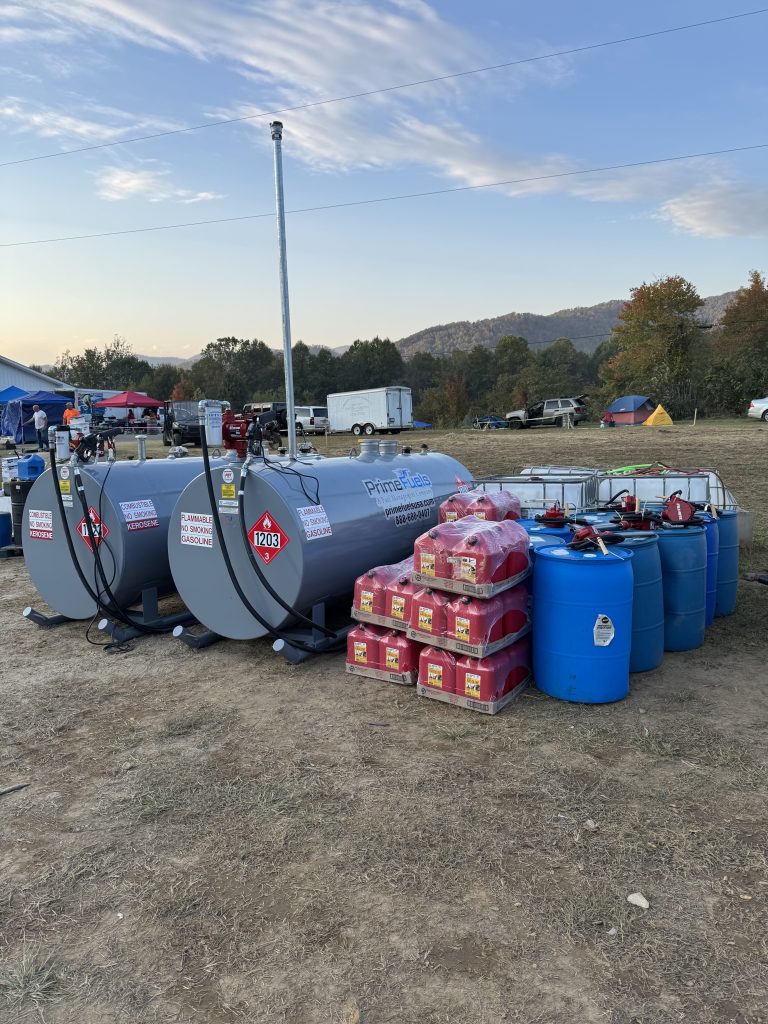
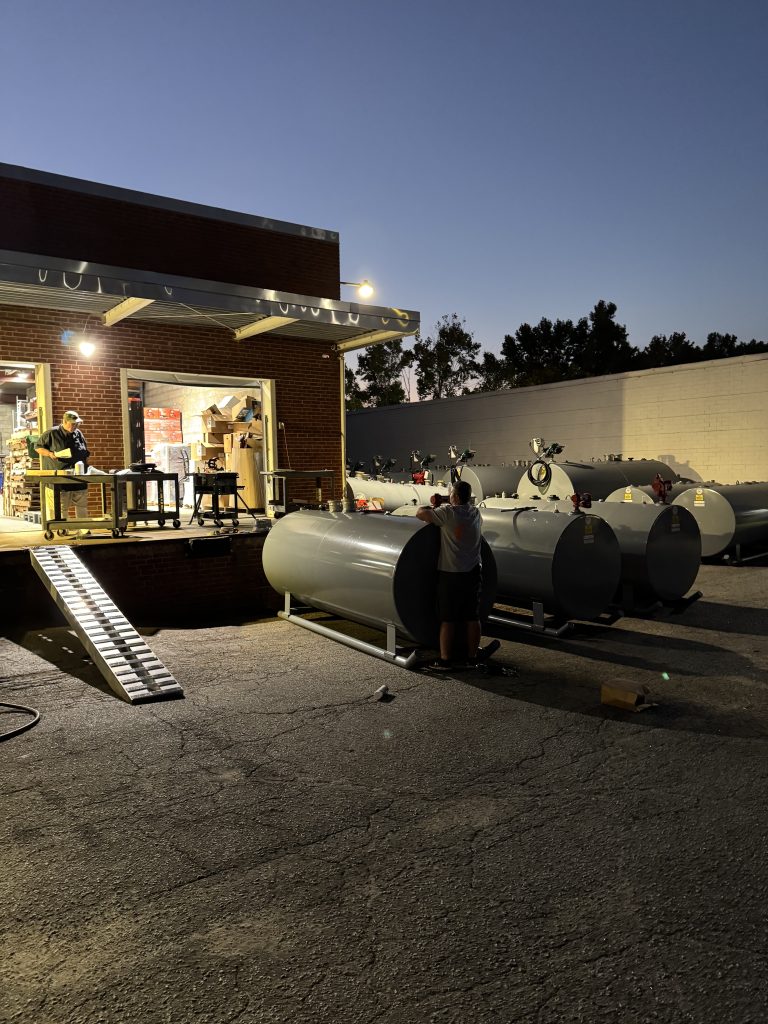
Every success in the fuel recovery efforts has been due to volunteers donating their time, trucks, supplies, and tools. One donation comes from Prime Fuels, a national fuel management company specializing in emergency fuel delivery, jobsite fuel, and natural disaster fuel services. Rhonda connected with Dan Jones, President of Prime fuels, who donated large fuel tanks, set up multiple fuel hubs across Western North Carolina, and waived delivery fees—only charging the cost of the fuel itself. “If it wasn’t for Dan of Prime Fuels, we wouldn’t have been able to help as many people as we are right now,” Rhonda emphasizes. “He’s been working 14 to 15 hours a day, donating his time and tanks, and retrofitting more tanks to send out to areas in need.”
Swannanoa, NC fuel hub.
Dan also provided additional connections that furthered the WCEN fuel efforts. “As President of Prime Fuels, he has partnerships with different fuel people and companies. Rhonda explained. “One of them just happened to be Phoenix, which is one of the largest distributors for the exact brand of hand pumps we needed.” Phoenix Pump donated hand pumps and smaller drums, which allowed fuel to be transported in smaller containers and delivered to areas inaccessible by larger trucks. “The problem we quickly realized was that, while we were getting these 1,000-gallon tanks in place, the road conditions meant they needed smaller containers to actually get the fuel out to people.” Rhonda explains. With smaller drums, fuel could be taken out on side by side ATVs with trailers to get to the areas in need.
Without Volunteer drivers and donors like Prime Fuels and Phoenix Pump, the logistics of delivering fuel to rural areas would have been impossible. “These companies have not only made this effort possible but have gone above and beyond to support their communities,” Rhonda says. “These people are busting their butts, donating their time and equipment to get fuel where it’s needed.”
What Kinds of Fuel Are Needed and Why
The variety of fuels being delivered is essential to meeting the needs of the region:
- Diesel: Vital for trucks, generators, and heavy machinery.
- Kerosene: A critical source of heat for many homes, especially in rural areas where power outages are common.
- Gasoline: Needed for transportation and smaller generators.
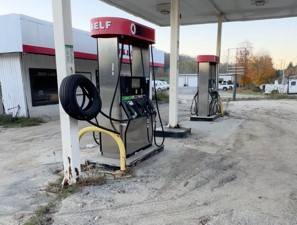
Each fuel serves a specific purpose, whether it’s keeping homes warm or powering equipment for cleanup and recovery. As the winter season approaches, the need for kerosene becomes more urgent. In areas like Newland, the only gas station that supplied kerosene was completely washed away, leaving 1,500 people without a reliable source of heat. “People are going to freeze if we don’t get enough fuel in place,” Rhonda warns.
The Challenge of Winter
As winter rapidly approaches, the urgency to secure fuel for Western North Carolina’s rural communities grows more pressing by the day. The temperature in the mountains will soon drop into the teens, significantly colder than most other parts of North Carolina, and these areas regularly experience heavy snow. For many, the situation is dire. Entire communities are still cut off due to washed-out roads and bridges. For example one community has about 150 homes completely isolated, with residents having to walk across rivers just to access supplies. Once those rivers begin to freeze, even that limited access will be impossible.
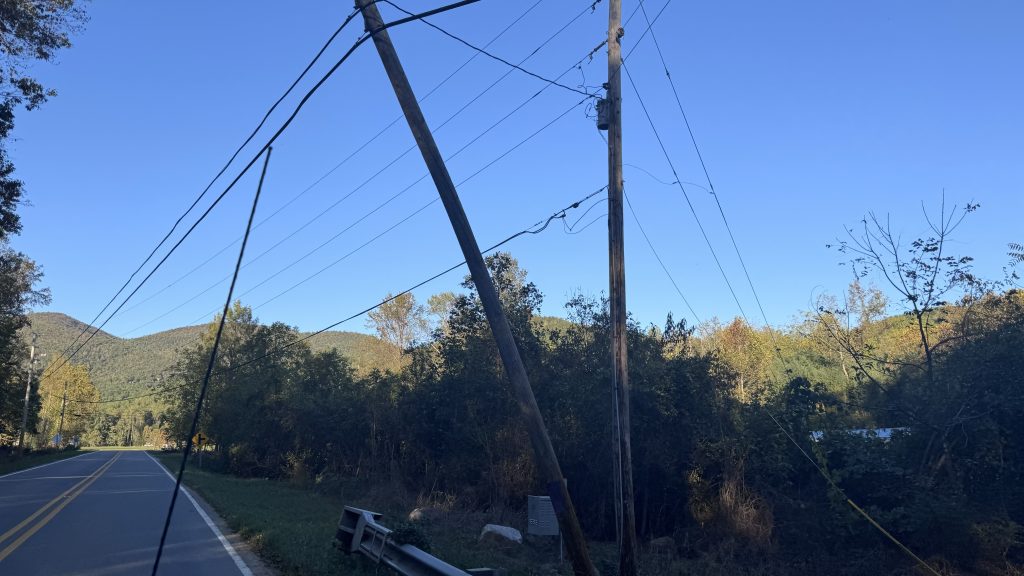
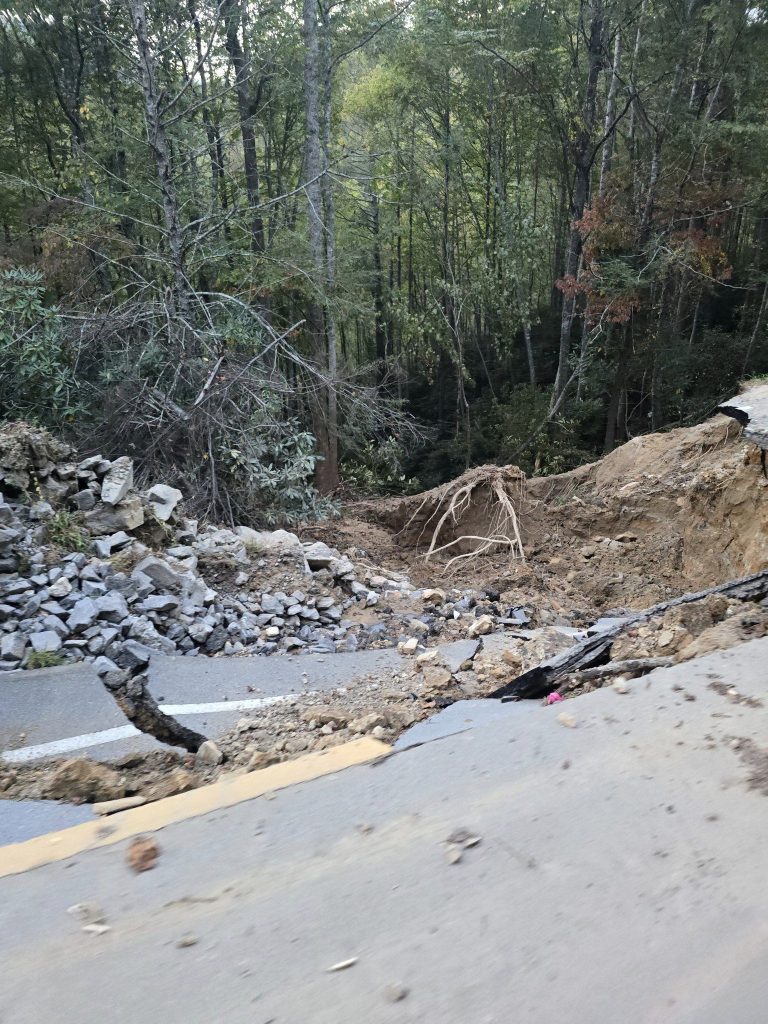
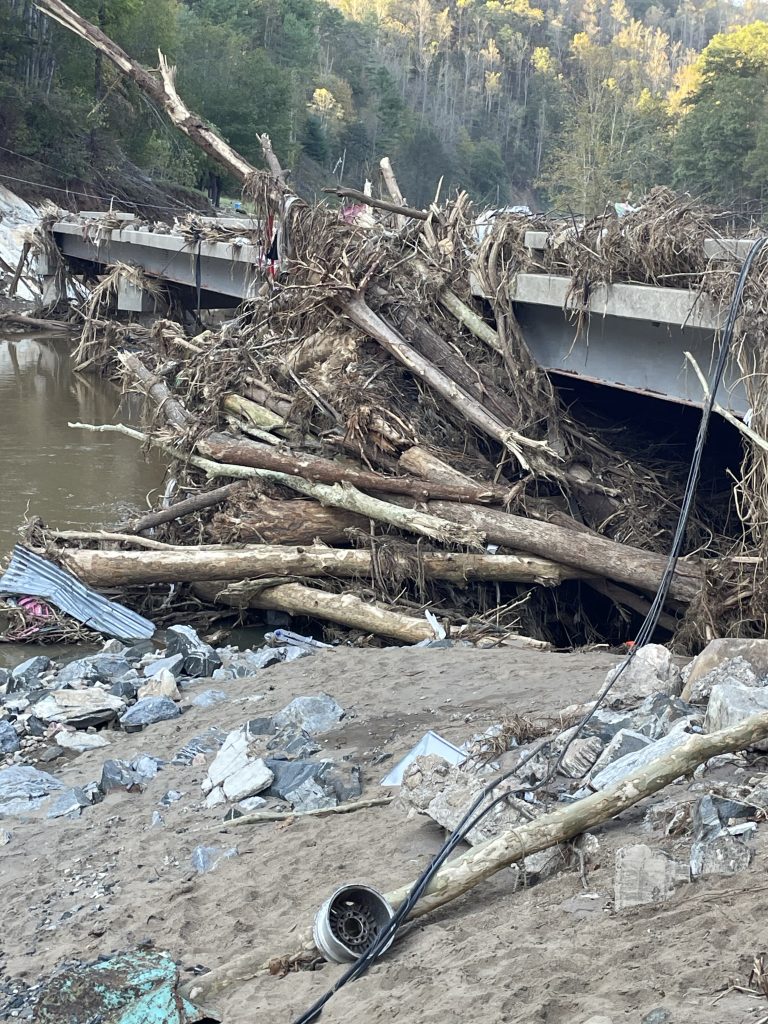
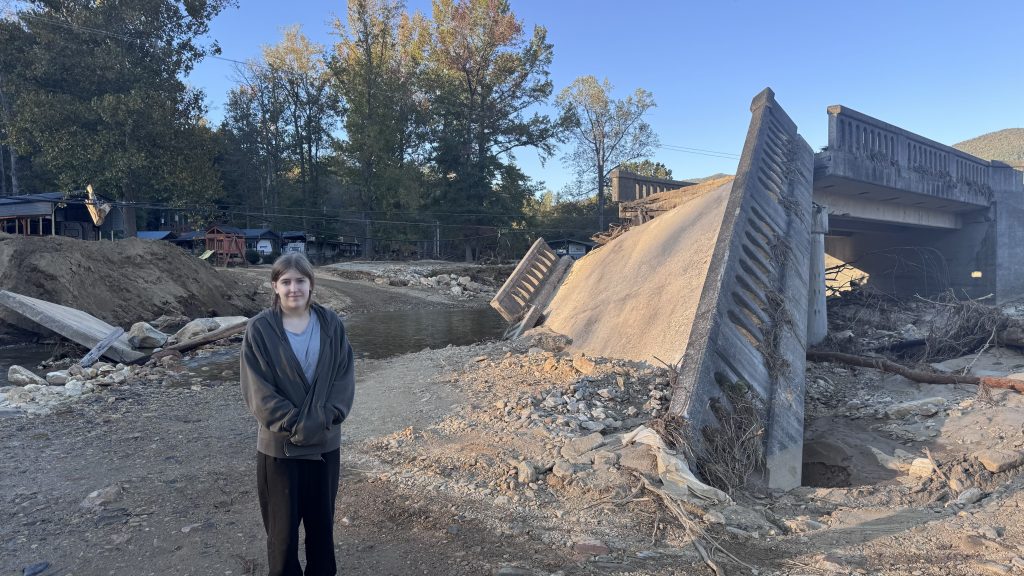
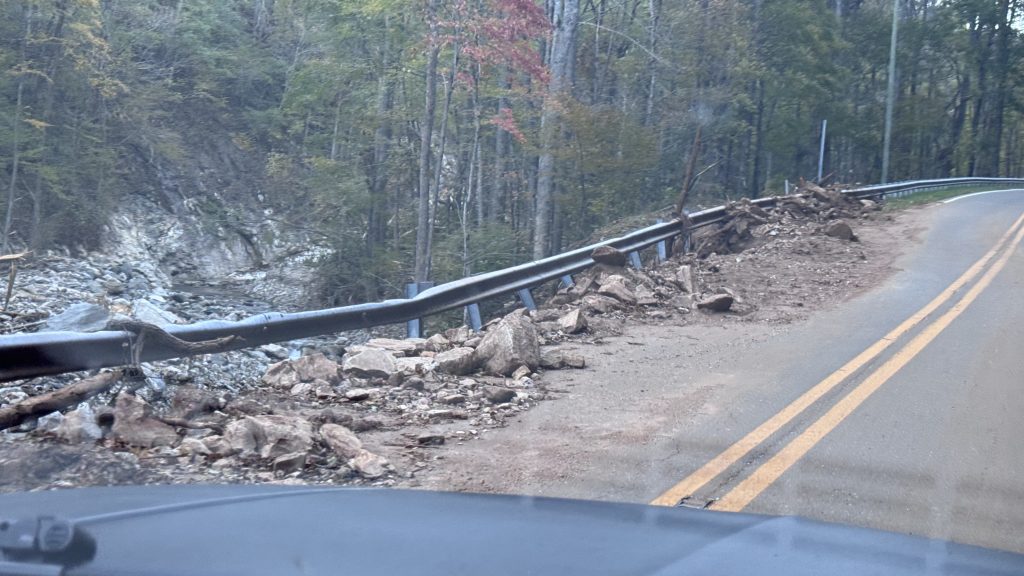
Fuel shortages compound these challenges. “The only gas station that supplied kerosene in Newland was washed down the river during the storm,” Rhonda explains. Kerosene is a lifeline for more than 1,500 people in this area—it’s their primary source of heat. “Even with the power back on, these residents rely on kerosene to heat their homes. If we don’t get enough fuel in place before the cold sets in, people will freeze,” Rhonda warns.
The roads leading into these remote areas are in poor condition, further complicating the effort to get fuel where it’s needed most. Communities like Swannanoa and Bat Cave don’t have a single functioning gas station, and residents are forced to drive 15 to 20 miles in either direction, hoping to find fuel. “Some people can’t even make that drive,” Rhonda adds, “because the roads are damaged or washed out. There were five gas stations on Main Street, and now, from what I understand, most are severely damaged or completely gone.”
“If we don’t get enough fuel in place before the cold sets in, people will freeze,”
Rhonda warns.
The reality is stark—Newland alone could require $300,000 worth of kerosene a month just to meet basic heating needs. The communities that depend on these resources are facing a harsh winter with dwindling options. The devastation of Hurricane Helene has left them not only vulnerable but in immediate danger if funding and fuel don’t arrive soon. “If we don’t act quickly, these communities will be left stranded in freezing conditions, without the resources they need to survive the winter,” Rhonda stresses.
Looking Forward
In the coming days, Rhonda’s team and other WCEN coordinators will continue gathering on-the-ground intelligence to assess needs and develop long-term solutions. “Soon we’ll be heading out to Swannanoa and Newland to how quickly we can build new fuel stations,” she shares.
The goal is to establish consistent access to fuel throughout the winter months, but achieving this will require additional funding and resources. “We need help—more than just donations—we need partnerships with larger organizations to bring in more fuel and supplies,” Rhonda stresses.
“We need partnerships with larger organizations to bring in more fuel and supplies,” Rhonda stresses.
How You Can Help
Rhonda’s work is one of community resilience and the power of people coming together in a time of crisis. It’s the core of WCEN: people helping people. However, the need is still urgent. Donations, both monetary and in-kind, are crucial to keeping families warm and safe through the winter. “Every dollar raised helps to buy fuel, and every tank we send out makes a difference,” Rhonda says.
Community Donations
Corporate Donations
Fuel by the Numbers
Rhonda and her team have distributed an impressive amount of fuel—check out the numbers!
- 8301 gallons of Diesel
- 3379 gallons of Gas
- 3,000 gallons of Karasone
- 1,000 gallons of Dyed Disel
- 1,000 gallons of High Grade Non Ethanol
- 50 gallons of 50/50
- 50 gallons of Pre Mixed Fuel Plus Oil
- 18 gallons of 4 Cycle Ethanol Free Fuel
- 198 gallons of Bar and Chain Oil
- 6 jugs Chainsaw Oil
Crunched down that is:
- 16,730 total gallons of total
- 50 total gallons of Pre Mixed Fuel Plus Oil
- 18 total gallons of 4 Cycle Ethanol Free Fuel
- 198 total gallons of Bar and Chain Oil
- 6 total jugs Chainsaw Oil